|
In the wake of the industrial development, in the Eastern region, with the setting up of steel plants necessitating large scale movement of Iron and Coal, substantial growth in freight traffic was observed and this could not be managed by steam traction. Electrification and diesalisation had to be introduced in early sixties to cope with the traffic. Indian Railways completed electrification of 216 RKM (route kilometer) on 25 kV AC traction during 2nd Five Year Plan. During the 3rd Plan, alongwith considerable indigenisation, electrification was extended over another 1678 RKM. The pace of electrification, however, slowed down until the oil crisis of seventies. The second oil crisis in particular brought to the fore the need for evolving a long term policy for electrification to reduce the dependence of Railways on petroleum based energy.
Under the directions of the PMO, in the context of shift from petroleum based energy in transport sector, the Secretaries Committee on energy headed by Cabinet Secretary decided in July 1980 that the Railways should speed up track electrification. Accordingly, the pace of electrification was considerably speeded up and Indian Railways achieved a record progress of 2812 RKM during the seventh Plan, 2708 RKM during Eighth Plan, 2484 RKM during Ninth Plan, 1810 RKM during Tenth Plan and 4556 RKM
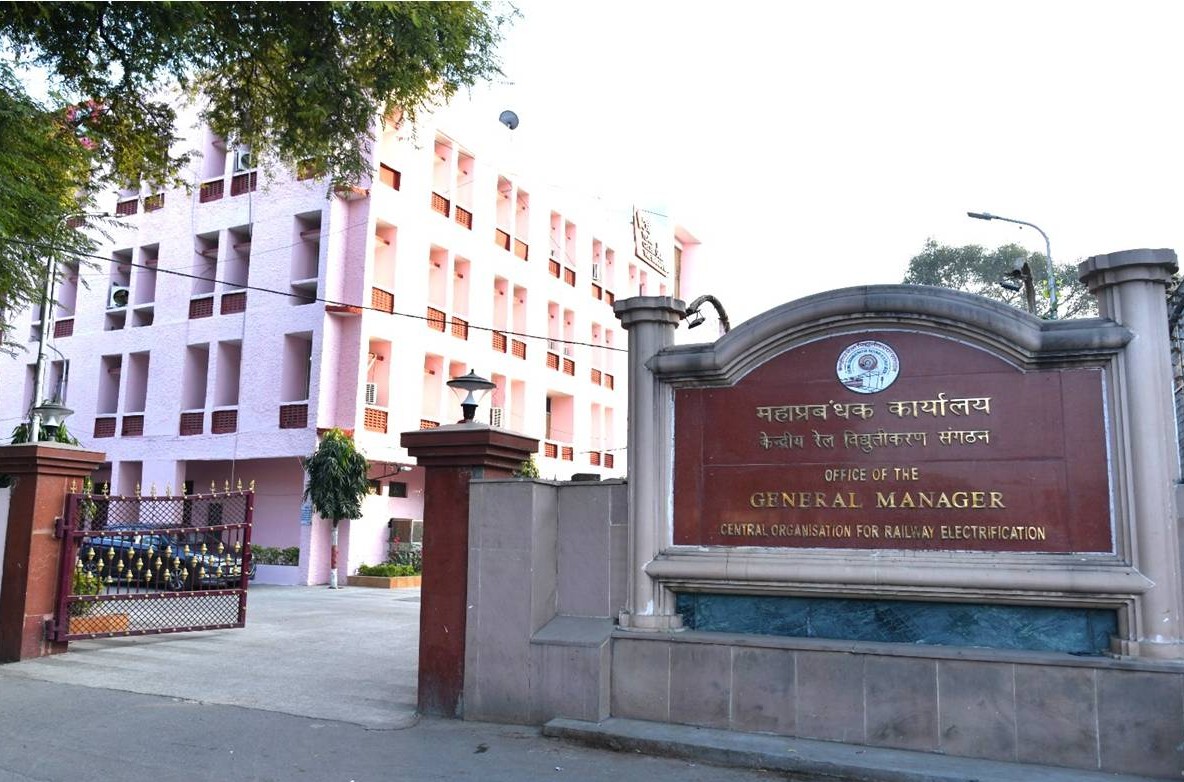
The pace of electrification of the entire railway network across the country has significantly accelerated since 2014. Driven by the ambitious government goal of 100% electrification of all Broad Gauge (BG) routes, the Centre orgenisation for Railway Electrification (CORE) has been working diligently through its nine project units in Ahmedabad, Ambala, Bangalore, Chennai, Kolkata, Jaipur, Lucknow, New Jalpaiguri, and Secunderabad to harness the benefits of electrification for Indian Railways.
As a result, Indian Railways has achieved remarkable success in BG electrification in recent years, electrifying 68,952 route kilometers by June 1, 2025, translating to 99% of the total BG network. This includes an impressive 41,655 route kilometers electrified in the last 10 years, constituting 66% of the overall electrification work.
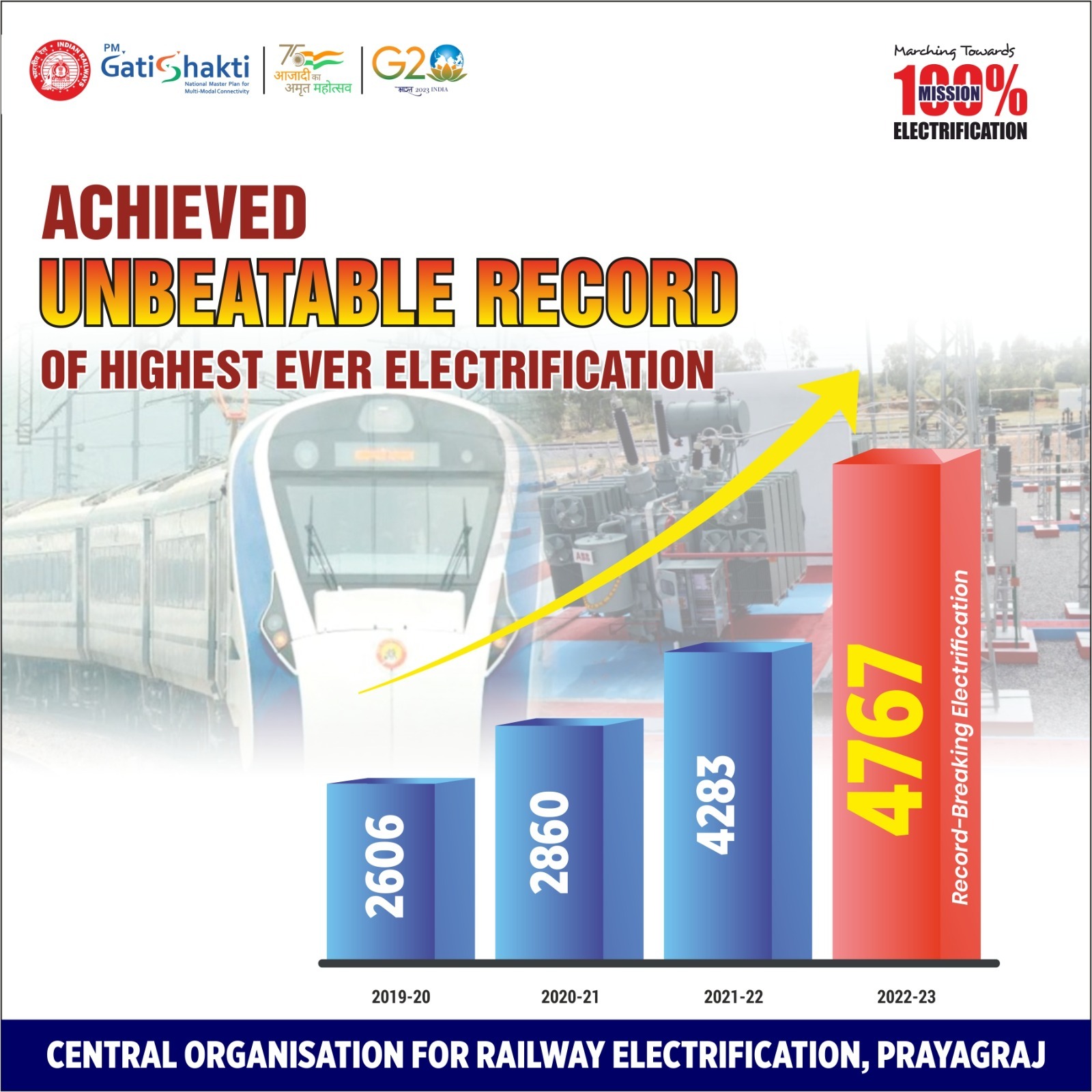
With rapid electrification on Indian Railways in the 46 years since its inception, CORE has played a pivotal role in this endeavor, achieving the electrification of 48,029 route kilometers, representing 70% of the total electrification work. In the past 10 years, CORE has demonstrated unprecedented speed and significantly contributed to the development of Indian Railways by electrifying 26,441 route kilometers, including a historic record of 4,770 route kilometers in the year 2022-23.
Currently, CORE has successfully met all electrification targets set by the Ministry of Railways, Government of India.
Important Landmarks of Indian Railways Electrification
|
Sl. No.
|
Date & Year
|
Railway
|
RKMs
|
Landmarks
|
|
1.
|
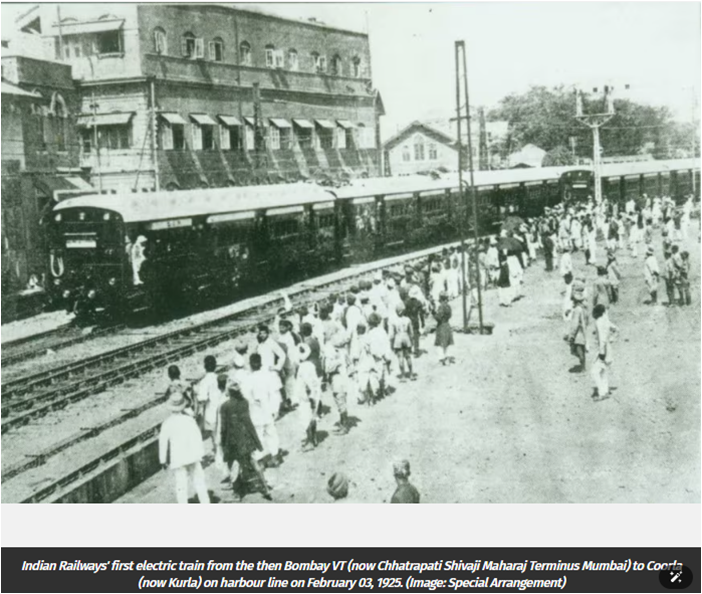
03.02.1925
|
Central
|
16
|
First electric train on 1500 Volt DC from Bombay VT to Kurla.
|
|
2.
|
Up to 1947
|
Central, Eastern
and South Eastern
|
388
|
RKM electrified on Indian Railways at the time of Independance.
|
|
3.
|
1954-58
|
Eastern
|
142
|
3000 V DC electrification on Howrah - Burdwan and Sheoraphulli - Tarakeshwar sections.
|
|
4.
|
14.12.1957
|
Eastern
|
142
|
Inauguration of EMU services on Howrah - Sheroaphulli section by Pandit Jawaharlal
Nehru, first P.M. of India.
|
|
5.
|
1957
|
-
|
-
|
Adoption of 25 kV AC single phase electricfication on Indian Railways.
|
|
6.
|
11.08.1960
|
South Eastern
|
75
|
First section electrified on 25 kV AC Rajkharswan - Dongoaposi.
|
|
7.
|
14.10.1961
|
-
|
-
|
Inauguration of first 1500 V DC electric locomotive (Lokmanya) for Bombay area by Pandit Jawaharlal Nehru, first P.M. of India.
|
|
8.
|
September
1962
|
-
|
-
|
Indroduction of first indigenous Electric Multiple Unit (EMU) services.
|
|
9.
|
1966 and 1968
|
Eastern and South
Eastern
|
-
|
3000 Volt DC converted in to 25 kV AC.
|
|
10.
|
07.01.1977
|
Eastern and Northern
|
1445
|
Commissioning of electrified trunk route of
Delhi-Howrah.
|
|
11.
|
31.03.1987
|
Northern, Central and
Western
|
1388
|
Commissioning of electrified trunk route of
Delhi-Bombay via Western Railway.
|
|
12.
|
31.01.1991
|
Eastern, South
Eastern and Central
|
1976
|
Commissioning of electrified trunk route of
Howrah-Bombay.
|
|
13.
|
31.03.1991
|
Northern, Central,
South Central and
Southern
|
2190
|
Commissioning of electrified trunk route of
Delhi-Chennai.
|
|
14.
|
31.01.1992
|
Nothern and Central
|
1542
|
Commissioning of electrified trunk route of
Delhi-Bombay via Central Railway.
|
|
15.
|
1994-95
|
Central and south
Eastern
|
770
|
Commissioning of 2x25 kV OHE system of Bina-
Katni and Katni-Anuppur- Bishrampur-Chirimiri.
|
|
16.
|
03.02.2002
|
Eastern and East
Central
|
534
|
Inauguration of eletricfied Howrah-Delhi route via
Patna by then Prime Minister Shri A.B. Bajpayee.
|
|
17.
|
30.05.2003
|
East Central
|
92
|
Inauguration of Patna-Gaya section by Hon’ble
President of Indian Dr. A.P.J.Abdul Kalam.
|
|
18.
|
29.08.2003
|
Central and Western
|
306
|
Inauguration of Udhna-Jalgaon section.
|
|
19.
|
26.01.2004
|
Northern
|
137
|
Inauguration of Ludhiana-Amritsar section.
|
|
20.
|
29.11.2005
|
South Eastern,
East Coast and South
Central
|
1117
|
Commissioning of electrified trunk route of
Howrah-Chennai (Missing link Kharagpur-
Waltair).
|
|
21.
|
06.08.2006
|
Southern
|
37
|
Inauguration of Villupuram-Pondicherry section
by Chief Minister of Puducherry, Shri N.
Rangasamy.
|
|
22.
|
30.12.2006
|
Southern
|
320
|
Commissioning of electrified route of Ernakulam-
Trivandrum by Minister for Railways Shri Lalu Prasad.
|
|
23.
|
24.11.2007
|
Eastern
|
127
|
Commissioning of electrified route of Krishnanagar-Lalgola by Minister for Railways Shri Lalu Prasad.
|
|
24.
|
08.12.2007
|
South Central
|
103
|
Comissioning of electrified route of Tirupati - Pakala-Katpadi by Minister for Railways Shri Lalu Parsad.
|
|
25.
|
07.07. 2008
|
East Coast
|
24
|
Successful Trial of Highest OHE in the world
(7.45 m high contact wire) in Jakhapura-Tomka
section for Double Stack Container Train
operation.
|
|
26.
|
26.10. 2009
|
Northern
|
100
|
Commissioning of electrified route of Lucknow-Hardoi section
|
|
27.
|
30.01.2010
|
Southern
|
68
|
CRS sanction received on 03.08.09. Hon’ble MR inaugurated Electric traction in Ariyalur-Tiruchchirapalli section.
|
|
28.
|
30.06.2011
|
Southern
|
95
|
Commissioning of electrified route of Tiruchchirapalli-Dindigul
|
|
29.
|
26.06.2012
|
East Central Railway
|
140
|
Commissioning of electrified route of Chhapra Kachehari-Barauni section
|
|
30.
|
04.12.2013
|
North Central Railway
|
231
|
Hon’ble minister of state (Rural Dev.) Shri Pradeep Jain ’Aditya’ inaugurated electric traction on in Jhansi-Kanpur section.
|
|
31.
|
19.05.2014
|
Southern
|
150
|
Commissioning of electrified route of Villupuram-Vellore
|
|
32.
|
15.12.2014
|
Southern
|
142
|
Commissioning of electrified route of Virudhunagar-MEJ-Tirunelveli & Vanchimaniyachi-Tuticorin
|
|
33.
|
24.05.2015
|
Northern
|
252
|
Inauguration of Rohtak-Lehra Mohbatt section
by Minister for Railways Shri Suresh Prabhu
|
|
34.
|
22.11.2015
|
North East Railway
|
80
|
Hon’ble minister of state Railway Shri Manoj Sinha inaugurated Electric traction in Gorakhpur Bhatni Section.
|
|
35.
|
17.01.2016
|
Northern Railway
|
207
|
Hon’ble minister of state Railway Shri Manoj Sinha inaugurated Electric traction in Varanasi-Phaphmau-Prayag-Allahabad-Unchahar section.
|
|
36.
|
19.02.2018
|
South Western Railway
|
96
|
Hon’ble Prime Minister Narendra Modi has inaugurated the electrification of Bengaluru-Mysuru railway line, which is set to reduce the travel time between the two cities.
|
|
37.
|
08.02.2020
|
North Central Railway
|
100
|
The Union Minister of State (MoS) for Railways Suresh Angadi inaugurated electrification of Chunar-Chopan railway line section.
|
|
38.
|
13.02.2020
|
Eastern Railway
|
140
|
Shri Piyush Goyal Rail Minister dedicated to the Nation railway electrification project in Katwa-Azimganj and Monigram-Nalhati sections of Howrah and Malda Divisions.
|
|
39.
|
29.06.2020
|
WCR
|
98
|
Commissioning of electrified route of Katni-Satna provide Electrified route to Mumbai – Howrah via Prayagraj
|
|
40.
|
30.06.2020
|
NCR/ECR
|
40
|
Commissioning of electrified route of Bhagalpur – Shivnarayanpur provide direct connectivity on electric traction Mumbai-Jalpaiguri as well as SVD Katra to Howrah via Patna.
|
|
41.
|
31.10.2020
|
SECR
|
58
|
Commissioning of electrified route of Lamta - Nainpur - Samnapur provided direct connectivity from Jabalpur to Balharshah which has reduced travelling distance by 266 Km.
|
|
42.
|
29.11.2020
|
NWR
|
42
|
Shri Piyush Goyal Rail Minister dedicated to the Nation railway electrification project in Dighwara - Bandikui (2nd line) & Bassi- Jaipur -Kanakpura sectin provide Direct connectivity on electric traction to Jaipur & Ajmer from New Delhi
|
|
43.
|
21.02.2021
|
WR
|
145
|
Commissioning of electrified route of Dhola - Savarkundla & Savarkundla - Pipavav provide direct connectivity on electric traction from Ahemedabad to Pipavav Port.
|
|
44.
|
01.07.2021
|
NFR
|
-
|
Commissioning of Jalpaiguri Road-Y Leg & Betgara- Kolagram 2nd line Delhi to Kamakhya has become fully electrified. . Now passenger and freight trains have started running on electric traction without engine change on this route.
|
|
45.
|
23.09.21
|
NER
|
40
|
Commissioning of Anandnagar - Nautanwa section direct connectivity to Nepal Border on electric traction with main line.
|
|
46.
|
29.09.21
|
NCR
|
101
|
Commissioning of Birla Nagar – Udi section shorter route from Gwalior to Etawah on electric traction.
|
|
47.
|
08.10.2021
|
NWR
|
50
|
Commissioning of Ajmer to Daurai and Beawar to Gudiya section the entire route from Delhi to Ahmedabad has been electrified..
|
|
48.
|
29.12.2021
|
NR
|
120
|
Commissioning of Faizabad – Akbarpur - Ayodya & Faizabad – Sultanpur a direct electrified network from major religious places of Uttar Pradesh like Ayodhya, Kashi/Varanasi and Prayagraj.
|
|
49.
|
07.02.2022
|
SER
|
33
|
After electrification of Aunjajhori-Gorumahisani – Badampahar section, Chakradharpur division is now fully electrified.
|
|
50.
|
20.10.2022
|
NCR
|
75
|
An important electrified route from Prayagraj to Bhopal has been achieved with the electrification of Ishanagar-Udaipura section (75 RKM) apart from North Central Railway becoming 100% electrified.
|
|
51.
|
20.02.2023
|
NER
|
118
|
With the electrification of Shohratgarh-Pachpherwa-Subhagpur section (118 RKM) the entire alternative stretch from Gonda via Balrampur-Anand Nagar to Gorakhpur has been fully electrified. At the same time entire State of Uttar Pradesh as well as NER have been fully electrified.
|
|
52.
|
23.02.2023
|
SCR
|
129
|
With the electrification of Pangri-Latur Road section (129 RKM), the entire stretch from Pune to Secundrabad via Kurduwadi, Latur Road and Vikarabad has been fully electrified. This will provide an alternative route to Pune-Wadi-Secunderabad section along with Central Railway being fully electrified.
|
|
53.
|
31.03.2023
|
SWR
|
244
|
The entire main line connecting Bengaluru and Hubballi has been fully electrified resulting in seamless end to end connectivity for running of Vande Bharat express with the electrification of Nittur-Arsikere-Birur-Hosdurga & Chikjajur-Devarguda-Karajagi-Hubballi sections (244 RKM).
|
|
54.
|
24.03.2023
|
NWR
|
61
|
Trains from New Delhi to Bikaner can now run on fully electrified route with the electrification of Benisar-Napasar-Bikaner section (61 RKM).
|
|
55.
|
15.03.2023
|
NFR
|
20
|
Meghalaya has been connected with the rest of India on electrified route with the electrification of Dudhnoi-Mendipathar (20 RKM) route which is a major achievement.
|
|
56.
|
21.09.2023
|
NWR
|
39
|
With the electrification of the Munabao-Gadra road section, trains coming from Jodhpur will be able to run uninterrupted on the electrified route till Munabao, which is the border station of Rajasthan.
|
|
57.
|
30.11.2023
|
NWR
|
74
|
After commissioning of Nokhada-Phalodi section, trains coming from Bhatinda have got an additional electrified route to Ahmedabad via Jodhpur.
|
|
58.
|
26.12.2023
|
WR
|
61
|
With the electrification of Halvad-Maliya Miyana-Surbari section, trains from Ahmedabad to New Bhuj via Gandhidham will run uninterrupted on the electrified route.
|
|
59.
|
26.12.2023
|
SWR
|
40
|
With the electrification of Anandapuram-Talaguppa railway section, uninterrupted power connectivity has been provided from Birur to Talguppa.
|
|
60.
|
09.03.2024
|
NWR
|
909
|
With the electrification of Suratgarh-Phalodi-Bhildi section, an additional electrified route has been created from Ahmedabad to Mumbai via Suratgarh-Phalodi-Jodhpur-Bhildi. Along with this, Sagar Sutlej Link Corridor (HUN-4) has also been completed.
|
|
61.
|
28.03.2024
|
SCR
|
774
|
With the electrification of Manmad-Mudkhed-Dhone section, an additional electrified route has been created connecting Western India to Southern India via Manmad-Secunderabad-Dhone. Along with this, Aravali South Link Corridor (HUN-9) has also been completed.
|
|
62.
|
28.06.2024
|
NWR
|
104
|
With the electrification of Jaisalmer-Ashapur Gomat section Central Organisation for Railway Electrification completed 100% electrification target given by Railway Board.
|
Year wise Progress
|
Electrification by CORE
|
|
SN.
|
Year
|
CRS authorization (RKM)
|
|
1.
|
1994-95
|
161
|
|
2.
|
1995-96
|
618
|
|
3.
|
1996-97
|
992
|
|
4.
|
1997-98
|
249
|
|
5.
|
1998-99
|
180
|
|
6.
|
1999-2000
|
344
|
|
7.
|
2000-01
|
464
|
|
8.
|
2001-02
|
974
|
|
9.
|
2002-03
|
334
|
|
10.
|
2003-04
|
771
|
|
11.
|
2004-05
|
352
|
|
12.
|
2005-06
|
821
|
|
13.
|
2006-07
|
417
|
|
14.
|
2007-08
|
291
|
|
15.
|
2008-09
|
273
|
|
16.
|
2009-10
|
421
|
|
17.
|
2010-11
|
74
|
|
18.
|
2011-12
|
451
|
|
19.
|
2012-13
|
1159
|
|
20.
|
2013-14
|
375
|
|
21.
|
2014-15
|
1097
|
|
22.
|
2015-16
|
1174
|
|
23.
|
2016-17
|
1004
|
|
24.
|
2017-18
|
3155
|
|
25.
|
2018-19
|
3613
|
|
26.
|
2019-2020
|
2606
|
|
27.
|
2020-2021
|
2860
|
|
28.
|
2021-2022
|
4278
|
|
29.
|
2022-2023
|
4767
|
|
30.
|
2023-2024
|
1970
|
|
31.
|
2024-2025
|
106
|
Innovations
|
INNOVATIONS
Modifications and Innovation over the years
|
|
In order to achieve economy,improve reliability and keep pace with the advancements in technoloy of varours equipment,lot of modificatios have been made in design and constuction practices of various system over the years.The details are listed below:
|
| 1. |
Input HT power supply: |
|
i.
|
Purchase of electric power was made at 25 kv earlier days e.g. Allahabad Division of Northen Railway and Bhusawal Division of Centrel Railway,However,in subsequent RE projects ,power supply is being at HT voltages of 66/110/132/220 kv.
|
|
ii.
|
Earlier power supply was taken through three phase double ciccuit tr.line .However,presentaly normally 2 phase single circuitTr line on double circuit towers are being constucted as a cost effective measure.
|
| iii. |
Similarly, for bay extension works in grid substations (GSSs) of SEBs, earlier three phase equipments like CBs, Isolators, CTs, bus bars etc. were employed, which have been reduced to two phase equipments suitable for Railways requirements.
|
| iv. |
This arrangement has been further made cost effective by way of T-Off arrangement in place of conventional connection from GSS, wherever feasible, thus reducing the cost of Tr. lines and Switching stations considerably.
|
| v. |
To reduce penalty on account of low power factor and exceeding maximum demand and to achieve the benefit of diversity factor, a single point supply from SEB and subsequent distribution to various TSSs through Railway owned Tr.line has also been adopted in some Railways.
|
| vi. |
Further NTPC/PGCIL supply is being planned at one or two centralized locations and distribution through Railways owned, three phase double circuit 132 kV transmission lines, to further reduce the tariff and also to improve the system reliability.
|
| 2. |
Substations (TSS) :
|
| i. |
Up gradation of original 8/10/12.5 MVA power transformer to higher capacity 21.6 MVA.
|
| ii. |
Further, enhanced spacing between TSSs with development of higher capacity Transformers resulted in reduction of nos. of TSSs and accordingly a considerable saving in capital as well as maintenance cost.
|
| iii. |
No. of Transformer in TSSs were earlier kept as two in all TSSs. However based on techno-economical consideration, presently alternate traction substations are provided with single and double transformers. This has been possible after up gradation of capacity of traction transformer from 12.5 MVA to 21.6 MVA.
|
| iv. |
In addition, on single line sections, Double transformer TSSs are being provided with one 12.5 MVA released transformer and the other new 21.6 MVA transformer.
|
| v. |
Reduction in TSS area.
|
| vi. |
Reduction in area of control room building.
|
| vii. |
Development of a miniaturized microprocessor based Control and Relay panel (Anupam panel) in TSSs for improved power supply reliability.
|
| viii. |
Indigenous development of integrated feeder protection module by using concept adopted by Japanese Railways.
|
| ix. |
Evolving Delta-I relay indigenously for protection against high impedance faults based on concepts adopted by Japanese Railways.
|
| x. |
Design and development of panto flashover relay.
|
| xi. |
Use of SF-6 circuit breakers/Vacuum Circuit Breakers and Interruptors in place of Oil Circuit Breakers and Interruptors.
|
| 3. |
OHE system :
|
| i. |
Reduction in cost of foundations due to reduction in volume, based on computerised designs for calculation of volume with actual loading parameters. In conventional systems, design is based mostly on RDSO provided charts. Due to new computerised design techniques, a saving of about 30% in volumes of foundations has been achieved in Ludhiana-Amritsar section.
|
| ii. |
Utilizing the copper scrap for fabrication of catenary and Jumper wires has resulted in cost saving in procurement of conductors.
|
| iii. |
Use of 5 kVA ATs at LC gates, IBH, way side stations in place of 10 kVA ATs used earlier.
|
| iv. |
Adoption of 2 x 25 kV AT system on Indian Railways by suitably customizing Japanese technologies suiting to Indian Railways requirements.
|
| v. |
Quantum of RC/BT provided for the protection of telecom overhead lines has been reduced due to revision of permissible induced voltage from 5V earlier to 60V presently.
|
| vi. |
Use of Continuous cast contact wire eliminated contact wire snapping cases improving the reliability.
|
| vii. |
ATD three-pulley type : This has resulted in reduction in breakage of SS wire ropes, which were frequent with winch type regulating equipments.
|
| viii. |
Developments of fit and forget type of fittings resulting in reduction of maintenance cost.
|
| ix. |
Use of metallised carbon panto strips and subsequently switching over to pure carbon panto strip resulting in reduction of wear and tear of contact wire thereby saving of maintenance cost on account of replacement of contact wire.
|
| x. |
Design and development of OHE Recording-cum Test Car for condition monitoring of OHE under live line conditions. This helps in introducing the concept of need based directed maintenance in OHE.
|
| xi. |
Improving the reliability of insulators used in OHE through R&D efforts for evolving a suitable material composition Use of composite insulators in place of Porcelain insulators.
|
| xii. |
Adoption of thermal measuring and image recording system for identifying bad OHE joints.
|
| xiii. |
Switching stations: As an innovation, switching stations on pole mounted interrupters are now being developed, due to which construction of building is not required.
|
|
4.
|
Remote Control system :
|
| i. |
Strowger type remote control equipment based on electro mechanical system, has been replaced with Microprocessor based and lately with PC based system.
|
| ii. |
Use of PC based SCADA (Supervisory Control and Data acquisition) system has resulted in flexibility in report generation and later analysis of failures. Better monitoring and control of system has been possible with this system. SCADA helps in better monitoring of power factor and maximum demand of TSSs, thereby minimizing the penalties being imposed by State Electricity Boards.
|
| iii. |
Mimic diagram board (MDB) has been replaced with PC monitor (2 to 5 in nos.), as a result of technological up-gradation.
|
| iv. |
Standardization of Supervisory Control and Data Acquisition (SCADA) system with the aim of achieving interchangeability between the remote terminal units (RTUs) of various suppliers has been done.
|
| 5. |
Signalling :
|
| i. |
RE organisation has continuously upgraded and adopted modern signalling technologies, to improve reliability, availability, maintainability and safety in train operation in line with various policy guidelines issued by Railway Board and RDSO thus, increasing line capacity and providing efficient train control and operation system. Some of the vital technological innovations introduced in signalling systems over the years are as mentioned below:
|
| ii. |
Multi Aspect Colour Light Signalling (MACLS) is being provided as a standard at all stations, along with introduction of 25 kVAC, thereby enhancing visibility of signals, boosting the confidence of loco pilots, hence increasing line capacity besides safety and punctuality in train operation. With this, Overhead systems has been replaced with the Under Ground power cables, which is much more reliable, safe and maintainable.
|
| iii. |
RE organisation is providing MACLS at all midsection Level Crossing Gates along with electrification, thus improving further enhancement in safety at level crossing gates.
|
| iv. |
To overcome the problem of fusing of filament of Signal Lamps, triple pole lamps were provided by RE organisation. In line with the latest guidelines of Railway Board now LED signals with associated modules is being provided by RE organisation at all installations to ensure enhanced visibility to loco pilots, at the same time deriving the long term benefit of maintainability and cost reduction due to longer life of equipment and reduction in power consumption.
|
| v. |
Track circuiting is being provided by RE organisation, as a vital safety aid for automatic check of occupation/ clearance of track portion being controlled by the signals, as a policy guideline and adopted as mission area by Railway Board subsequent to the fatal train accident at Ferozabad station of Northern Railway in 1995.
|
| vi. |
At stations where PRC sleepers are not available and replacement of steel sleepers is not feasible viz. at steel girder bridges and typical station yards etc. for track circuiting, an alternate technology of Axle Counters have been used to carry forward the vital safety work by RE organisation.
|
| vii. |
As the volume of train operations to be controlled grew over vital routes, it became more and more cumbersome to operate first generation signal interlocking system i.e. mechanical lever frames. RE organisation has provided second-generation interlocking system called Relay Interlocking system, which were subsequently evolved into Route setting type Central Panel Operation.
|
| viii. |
Besides up gradation in technology, RE organisation has computerised all the vital Signalling Documentation by adopting Computer Aided Drawing as a standard practice for proper upkeep, ease of modification at later date and standardisation of signalling documentation.
|
| ix. |
Second Distant Signal has also been provided by RE organisation on Rajdhani and Shatabdi Express routes where permissible train speed is exceeding 120 KMPH, to cater for higher braking distance of 1.5 Km, thus providing confidence to the loco pilots to control and run their trains at the maximum permissible speeds and in turn improve punctuality and safety of these high speed trains.
|
| x. |
With the adoption of Central panel operation, to overcome the problem of last vehicle check, Block Proving by Axle Counter (BPAC) has been evolved and adopted as per policy guidelines by Railway Board. RE organisation has quickly adopted the technology and provided the same over all such vital sections.
|
| xi. |
With the advent of fail safe electronics in Railway signalling world over and adoption of the same in the recent years by Indian Railways, RE organisation has ushered into the arena of State-of-the Art technology by commissioning of Solid State Interlocking (SSI)/ Electronic Interlocking (EI) at four stations in Bhadrak-Kapilas section of East Coast Railway in 2004-05.
|
| xii. |
SMPS (Switch Mode Power Supply) based on Integrated Power Supply (IPS) as developed by RDSO, is being provided by RE organisation as a techno economical solution providing most efficient, reliable, modular and maintainable power supply for vital signalling installations, as per policy guidelines of Railway Board.
|
| xiii. |
Networked Data Logger system is being provided as policy guidelines of Railway Board for real time recording and monitoring of all events of signalling equipments at station. This is further being used for preventive and predictive maintenance besides extensively being used for directed maintenance by maintenance organisations.
|
| xiv. |
RE organisation has ushered into the field of Communication based signalling with commissioning of OFC based UFSBI (Universal Fail Safe Block Interface) equipments for block transmission in Villupuram-Pondicherry section.
|
|
6.
|
Telecommunication :
|
| i. |
With the electrification, Over Head Telecom wires were replaced by Under Ground cables along with the provision of Emergency Communication sockets all along the railway track, to avoid induction effect on telecom circuits.
|
| ii. |
With the advent of OFC technology world over and considerable reduction in cost of OFC system and in view of the prevailing Law & Order situation in some parts of the country, as per policy decision of Railway Board in 1996, RE organisation marched ahead in providing new generation technology by laying 24 Fibre OFC along with 4 Quad cable. Subsequently, due to increase in requirement of Quad pairs, as per Railway Board’s policy guidelines, 6 Quad cable is being laid by RE organisation. The inherent benefits of OFC cable being immune to AC induced effect in 25 kV RE area, anti theft prone due to near nil resale value, techno-economical superiority over any available communication system, besides providing vast channel capacity for long range backbone network of voice and data circuits has proven boon to Railway operation. With further shift in technological developments and to keep abreast of modern technology and to derive optimum techno economical benefits, RE organisation switched over from earlier version of PDH (Plessiochronous Digital Hierarchy) equipments to state of the art SDH (Synchronous Digital Hierarchy) equipments as per Board’s policy guidelines.
|
| iii. |
Centralised Network Management System (NMS) is being provided as an integral part of the OFC system for online monitoring and maintenance of entire OFC network commissioned over the section of Railway by RE organisation, to ensure reliability and availability of quality voice and data channel thus empowering Indian Railways to cater for speedier, cost effective and safe train operations.
|
| iv. |
RE organisation is having close liaison with RDSO regarding latest technologies and improvements in various equipment and material adopted in Railway electrification to bring in State-of-the-Art technology. Maintenance problems being faced by Zonal Railways are being kept into consideration while designs are made, as well as to keep cost of electrification work optimum. RE organisation works with spirit and enthusiasm, with committed team of Officers, Supervisors and Staff to work in close co-ordination with Zonal Railways to complete the works in targeted time to achieve the corporate objectives of Railway transportation.
Advantages of Railway Electrification
Advantages of Railway Electrification
i) Energy Conservation through Railway Electrification:
Railway transport is far more energy efficient as compared to road transport. Railways are; a) Six times more energy efficient as compared to road, b) Four times more economical in land use c) Six times more cost effective vis-à-vis road in construction costs for comparable levels of traffic. Among the modes of rail transport, electric traction is the most energy efficient. This can be seen in the light of the fact that every 100 route kilometers electrified section results in saving of annual consumption of more than four million liters of diesel oil, which saves Rs. 2500 Crores worth foreign exchange annually.
ii) Role of Electric Traction in Suburban Transport:
Electric Multiple Units (EMUs) are ideal for suburban services with higher acceleration and braking features required for frequent starts and stops. EMU services form the backbone of suburban transportation in the metropolitan cities of Mumbai, Kolkata and Chennai. In Mumbai area alone, about 1950 EMU trains are running daily on the suburban sections of Central and Western Railways which cater for about 5 million passengers every day.
Electrification has made possible the introduction of EMU services in many suburban like main line sections. These services have become extremely popular.
CRS inspection of Railway Electrification work of Naupada – Gunpur 90 RKM in the territory of ECoR completed on 15.03.2020
Commissioner for Railway Safety (CRS) on inspection of a newly electrified section
iii) Haulage of Heavier Freight Trains and Longer Passenger Trains under Electric Traction:
Electrification is making possible running of heavier freight trains. With the imported 6000 HP Thyristor locomotives, a consist of two of these locomotives, presently handles 4500 tonne trains in gradients upto 1 in 60 as against three numbers of 4000 HP earlier locomotives. Running of 9000 tonne trains is also possible with such locomotives, as has already been proved in tests conducted successfully in Ghaziabad - Mughal Sarai section.
With the introduction of electrification, 21 passenger coaches are hauled by a single locomotive in most of the sections. A single electric locomotive is now hauling Prayagraj Express with 24 coaches between New Delhi and Allahabad. Introduction of Shatabdi Express services operating at 130 KMPH under electric traction have been achieved purely through indigenous efforts of Indian Railways.
iv) Benefits of clearer environment:
One of the major advantages of electric traction is pollution free atmosphere not only to the travelers but also to the surrounding environment. Electric traction is proven to be less pollutant than the existing diesel mode and thus could be more eco-friendly to an area having delicate flora and fauna. Electric traction could reduce noise and air pollution and result in lesser disturbance to wild life habitant of the region.
TECHNOLOGY UPGRADATION
Introduction of Railway Electrification has caused major impetus to Technology up-gradation on Indian Railways. Some of these are listed below:
a) Modernization of Equipment - With a view to bring down the maintenance cost and improve the reliability of power supply system, Railway Electrification has gone in for state-for-the-art technology as prevalent in the international arena viz., dry cast resin transformers, SF-6/Vacuum switch-gear, long creep age solid core insulators and PTFE neutral section. 8 wheeler self-propelled OHE inspection cars have also been introduced to improve maintenance. Action has also been initiated for procurement of OHE recording car for monitoring the performance of overhead equipment.
Signalling and telecommunication systems are also upgraded by adopting state-of-the-art technology. Semaphore signalling system is being replaced by color light signalling system. Use of color light signals results in better visibility of signaling aspects to the loco pilots of running trains and this makes train running safer and operationally efficient. Inter-locking system is also being changed to panel or route relay interlocking. Besides speedier movement of traffic, these up-gradation measures contribute towards increase in safety.
Underground cables are provided along with electrification, which results in more reliable and better quality of communication.
b) Supervisory Remote Control & Data Acquisition System (SCADA) - 220 / 132 / 25 kV power supply network for electrification extending along the track over a zone of about 200/300 km is centrally controlled from the division control center through remote control arrangements to ensure un-interrupted power supply to the track overhead equipment. In the present day electrification projects, state-of-the-art microprocessor based supervisory control and data acquisition system (SCADA) is being provided as against the earlier electro-mechanical strowger system of remote control equipment. The SCADA system has facilities for tele-metering of voltage, current, maximum demand and power factor on a real time basis which enables control of maximum demand and thereby the charges thereof to be paid to the State Electricity Boards. In addition, this system provides for automatic trouble shooting and isolation of faulty section.
c) 2 x 25 kV System - Indian Railways have introduced 2 x 25 KV Auto Transformer Feeding System of power supply on Bina-Katni-Anuppur-Bishrampur/Chirimiri coal route of Central Railway and South-Eastern Railway as distinct from the present conventional 25 kV AC system. With this system the advantage of high voltage transmission, i.e. 50 KV is realized permitting at the same time inter-running of standard 25 kV electric locomotives. This is achieved by an additional power conductor on top of the overhead equipment and the mast with 50 kV being obtained between the overhead equipment and the feeder. In addition, use of return conductor and booster transformers is eliminated completely.
Traction Sub-Station
This pilot project has been executed with the technical guidance from Japanese Railways Technical Services (JARTS). This 2 x 25 kV traction system is already in vogue on the TGV of France and Shinkasen of Japan.
d) Electric Rolling Stock
As part of the modernization plan, Indian Railways had imported eighteen 18 6000 Horse Power Thyristor Locomotives, with transfer of technology. Indian Railways have developed chopper technology for DCEMUs in collaboration with Bhabha Atomic Research Center (BARC) and motor coaches with this technology have been inducted in service. The chopper technology, in addition to being less maintenance intensive is expected to save energy up to 30% to 34% in the sub-urban services.
SIGNALLING AND TELECOMMUNICATION
i) Optical Fibre Communication - Indian Railways have gone in for modern communication technology and are using Optical Fibre Cable. This cable is free from copper and is, therefore, not prone to theft. It provides superior quality of communication with built in large number of telephone channels to meet future needs of train operation and safety. 2572 Kilometers of Optical Fibre communication system have been commissioned on the Nagpur-Itarsi, Nagpur-Durg, Itarsi-Bhusawal, Jhajha-Mokama, Tori-Gumia, Ambala-Saharanpur, Adra-Midnapur, VSKP-Golanthra, Shoranur-Ernakulam, Tata-Chakradharpur, Delhi and Mumbai area sections as part of Railway Electrification, so far.
Indian Railways has also taken a policy decision that in future along with Railway Electrification, they will lay 24 Fibre Optic cable. They have also started making efforts for the commercial exploitation of their existing communication infra structure and to exploit their "right of way" along the tracks by private parties laying their Optical Fibre Cables.
ii) Train Radio Communication - Optical Fibre technology has come in handy for introducing Mobile Communication from running train and has been successfully introduced along with electrification. With this the loco pilot and guard of the train can talk to each other and with section control on moving train. This will be especially useful in emergencies like accidents etc.

Train to control Mobile Radio Communication
Some Importent Benefits of Railway Electrification.
- Electrification will provide energy efficient, eco-friendly mode of transport and also improve system throughput by modernization of the railway system.
- Mission Electrification will result into seamless (end to end) train operation on electric traction.
- Prioritizing electrification of high density network (HDN), high utilized network (HUN) and last mile connectivity/port connectivity routs here started giving returns early.
- Electrification will help in increasing average speed of Freight Trains thereby help in achieving objective of "Mission Raftar".
- Enable haulage of heavier freight and longer passenger trains at higher speeds.
- Expected annual saving of the order of 14566 crore per year post 100% electrification.
- Employment of about 5.5 lakh man years will be generated during execution period of Mission electrification.
Vision & Mission
VISION & MISSION STATEMENTS
|
|

 Accessibility Controls